
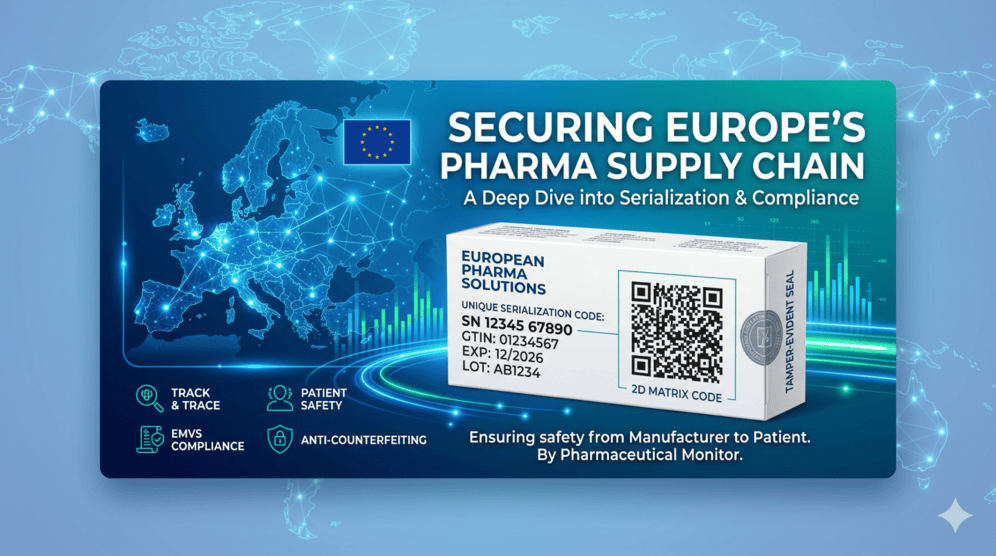
Guarding the Supply Chain: How Pharmaceutical Serialization Protects Patients Across Europe
In recent years, the European pharmaceutical sector has faced a sophisticated and dangerous opponent: counterfeit medicines. The World Health Organization (WHO) estimates that up to 10% of medications in lower-income nations are falsified. But the West is not immune. Fake drugs—often containing toxic ingredients, incorrect dosages, or no active ingredients at all—frequently attempt to slip through highly developed European networks.
To fight back, Europe turned to technology. The solution? Pharmaceutical serialization.
What is Pharmaceutical Serialization?
At its core, serialization is the process of assigning a unique, traceable serial number to every individual prescription medicine package. Instead of tracking drugs by the batch or lot, serialization drills down to the single box level.
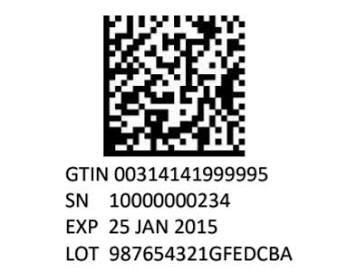
This information is housed inside a 2D Data Matrix code printed on the packaging. To create an ironclad identity, each code must include four essential elements:
GTIN (Global Trade Item Number): A globally recognized product identifier.
Unique Serial Number: A randomized sequence generated to prevent predictability or duplication.
Batch/Lot Number: For manufacturing tracking.
Expiry Date: To ensure quality control.
The Legal Backbone: The Falsified Medicines Directive (FMD)
Passed in 2011 and fully implemented in 2019, the Falsified Medicines Directive (FMD) is the regulation driving this security overhaul across the European Union. The FMD mandates a strict two-pronged approach for all prescription medications:
Serialization: The unique 2D barcode mentioned above.
Anti-Tampering Devices (ATDs): Packaging seals that visibly break if opened, proving the medicine hasn’t been intercepted.
How the Ecosystem Works in Real-Time
The true power of the FMD lies in its centralized network, known as the European Medicines Verification System (EMVS).
At the Factory: The manufacturer generates the unique codes, prints them on the boxes, and uploads them to the EMVS database.
Through the Chain: Distributors scan the barcodes at major shipping and transit milestones, creating an audit trail.
At the Pharmacy counter: Before handing the medication to a patient, the pharmacist scans the 2D barcode. The system instantly cross-checks it with the EMVS database. If it matches, the code is "decommissioned" (marked as dispensed). If it flashes a red flag, it is flagged as suspicious and pulled for immediate investigation.
The Strategic Benefits of Serialization
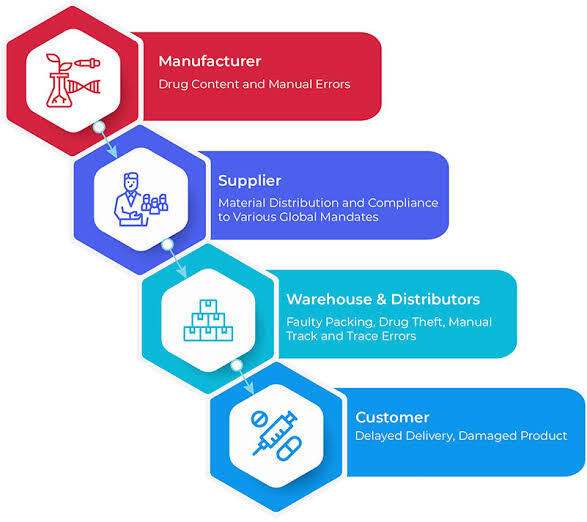
Implementing a rigorous track-and-trace network delivers major structural advantages to the pharmaceutical supply chain:
Uncompromising Patient Safety: It stops fake, ineffective, or harmful drugs from reaching consumers, protecting lives and upholding trust in public healthcare systems.
End-to-End Transparency: Regulators, manufacturers, and logistics partners gain complete visibility into the journey of a product, making it easy to spot deviations.
Precision Recall Management: If a specific batch of medicine is found to be defective, manufacturers no longer have to pull massive quantities of stock blindly. They can target and recall the exact individual serialized boxes, saving massive amounts of time and capital.
Data Analytics and Optimization: The sheer volume of real-time supply chain data allows companies to accurately forecast demand, streamline inventory, and uncover operational bottlenecks.
Hidden Environmental Wins: By minimizing broad-batch product waste during recalls and reducing excess production through smarter inventory tracking, serialization directly supports European green initiatives.
Navigating the Implementation Hurdles
While the long-term payoff is undeniable, transforming an entire continent’s supply chain comes with clear friction points:
Staggering Upfront Costs: For smaller contract manufacturers, packaging plants, and independent pharmacies, investing in new high-speed industrial printers, scanning hardware, and specialized IT infrastructure represents a heavy financial burden.
Data Management Complexity: Generating, validating, and storing billions of individual, randomized numbers requires highly robust, ultra-secure cloud systems and dedicated technical talent to maintain data integrity.
Interoperability Challenges: The EU is a patchwork of different countries, local languages, and regional regulatory bodies. Ensuring disparate IT systems seamlessly communicate across borders remains an ongoing battle.
The Evolving Threat: Counterfeiters do not sit still. As serialization standards tighten, criminal networks constantly attempt to find vulnerabilities, mimic codes, or exploit gaps, forcing security systems to continually adapt.
The Horizon: What’s Next for Secure Supply Chains?
Serialization isn't a static destination; it is the foundation for future innovation. Europe is already exploring how emerging technologies can be layered on top of current FMD frameworks:
Blockchain Technology: By moving tracking data to an immutable, decentralized ledger, the pharmaceutical industry could eliminate single points of failure, making it virtually impossible for counterfeit data to be injected into the history log.
Artificial Intelligence and IoT: Machine learning algorithms can analyze scanning patterns across Europe to detect anomalies or predict potential security breaches before they occur. Simultaneously, Internet of Things (IoT) sensors can combine serialization data with real-time temperature tracking to ensure cold-chain integrity for biologics and vaccines.